Measuring Where Things Are and How They Move
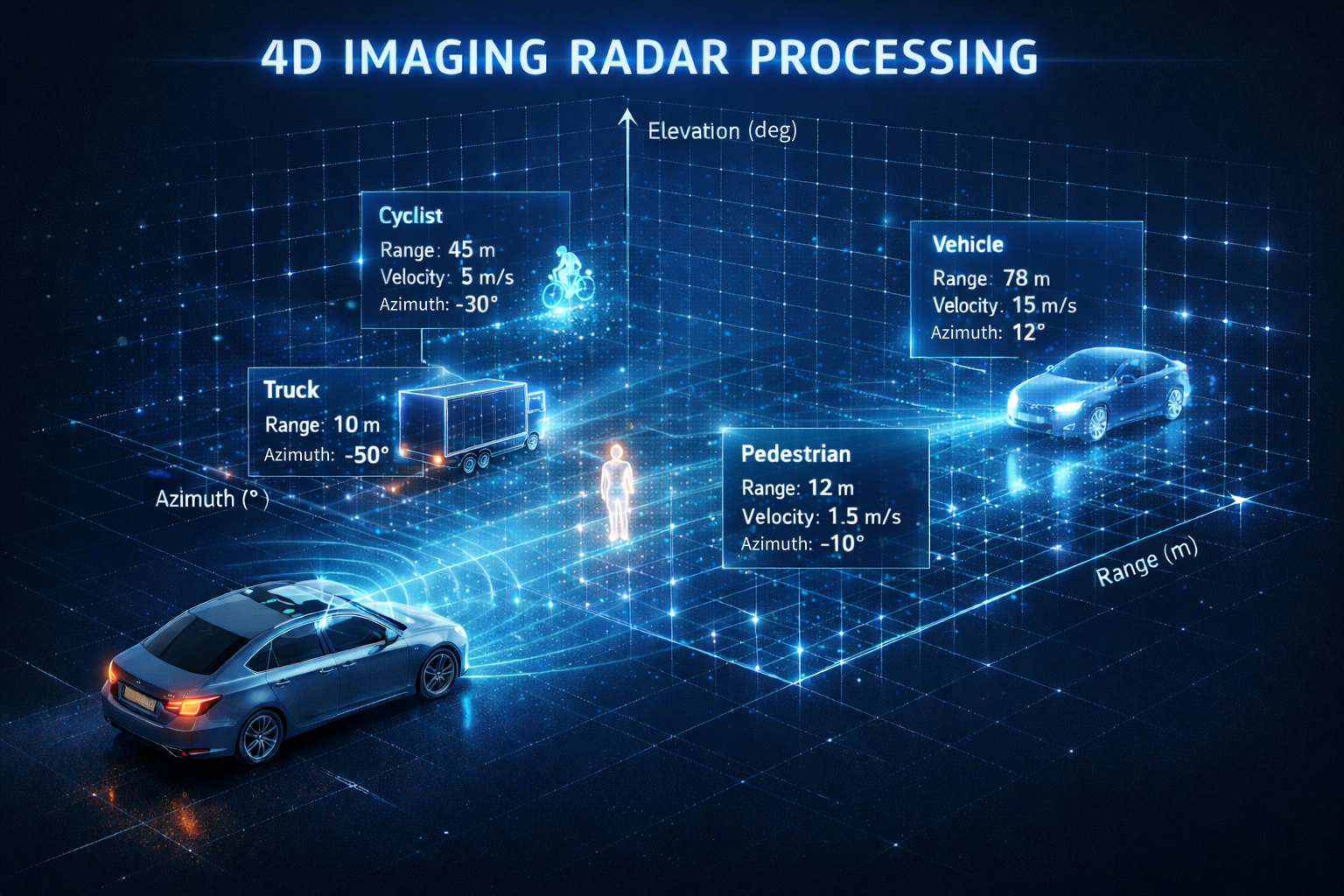
4D imaging radar combines range, azimuth, elevation, and Doppler velocity measurements to characterize objects in a scene. By capturing both spatial position and motion, it provides a richer representation of the environment than range-only or conventional motion-detection systems.
Real-world environments contain clutter, interference, and multiple targets whose returns may overlap or change rapidly. Omega Sensing Technologies develops signal-processing and inference methods to distinguish target returns from background, resolve challenging detections, and support reliable tracking in dynamic conditions.
How It Works
Multidimensional Radar Processing
We analyze radar measurements across range, Doppler, and angular dimensions to distinguish targets and separate returns that may overlap in conventional processing. Joint processing of these dimensions helps extract useful information from complex scenes.
Statistical Detection and Tracking
Statistical detection methods distinguish candidate targets from clutter and noise. Tracking algorithms associate detections across successive measurements to estimate target trajectories and maintain continuity as objects move through the scene.
Target Classification
We use motion characteristics, spatial features, and radar signatures to support target classification. Statistical inference and machine learning can complement these features to improve discrimination among target classes in challenging environments.
Applications
Intelligent Transportation
Vehicle detection, classification, and tracking for traffic monitoring, roadway sensing, and intelligent transportation systems.
Autonomous and Assisted Mobility
Environmental perception and motion awareness for autonomous vehicles, driver-assistance systems, and mobile robotic platforms.
Perimeter Security
Detection and tracking of moving targets around protected facilities, restricted areas, and other security-sensitive locations.